
What does 'system configuration' mean?
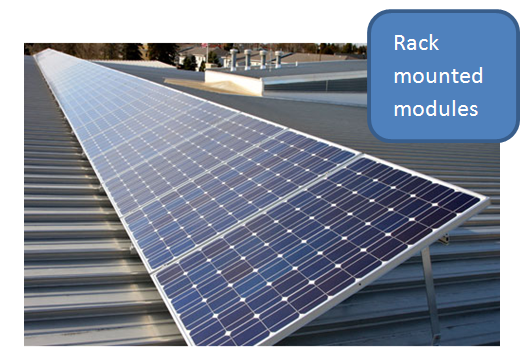
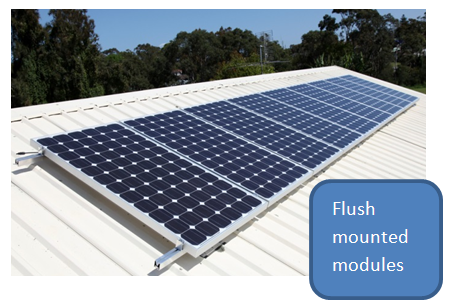
The PV system will consist of solar panels/modules and solar inverter(s). The way the system is configured is important in calculating the expected output of the system.
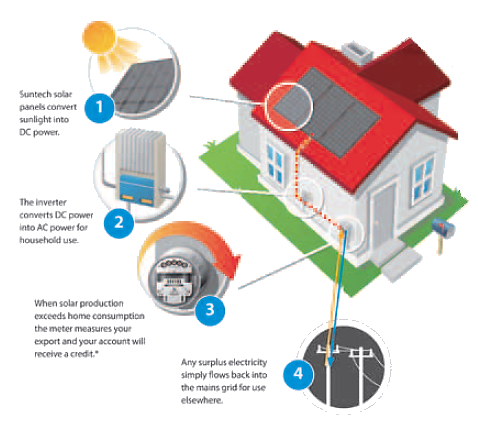
An inverter is an electronic device which converts DC power to AC power, so that power generated from the PV system can be fed into the electricity grid. Solar panels are connected to inverters through strings.
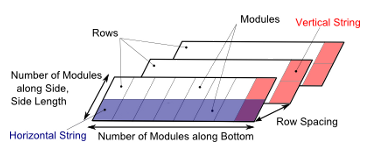
A string consists of multiple solar panels connected in series in the same tilt and orientation. The tilt of a panel is the angle between the horizontal and the slope of the panel. The orientation of the panel is the direction the front of the solar panels is facing- i.e. 0 degrees for North facing and -90 degrees and 90 degrees for west and east facing respectively.
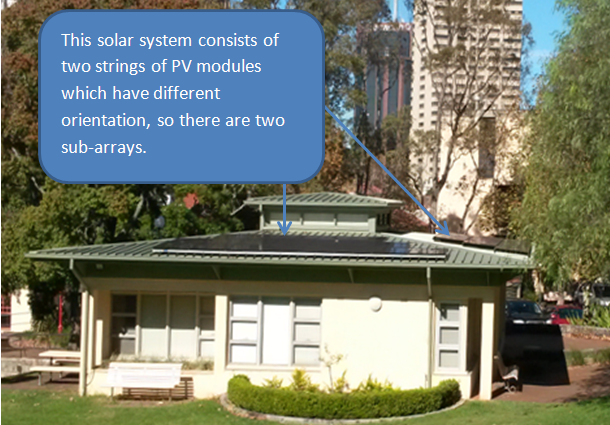
If modules of differing tilts and/or orientation are connected to the same inverter, they are divided into sub-arrays. A sub-array consists of a single or multiple string(s) of solar panels with the same tilt and orientation. There can be 1 or more sub-arrays connected to a single inverter depending on the inverter specifications and the PV system requirements.
Diagram below of PV system configuration labelling terms: